The Value of In-Laws

wedding couple taking a traditional ceremony
Photo by Min An on Pexels.com

“Building bonds of love through spending time together and treating each other with respect and affection will be far easier on your budget than trying with money to satisfy insatiable desires for things.”  (Poduska, 201)

I have two sets of in-laws.  One with my first marriage in which I was immediately welcomed-in and treated as one of their own.  I remember my mother-in-law saying – ‘Our son says he loves you; and if he does, so do we.’  That made me feel like I was on top of the world!  Even through my first marriage’s difficulties and eventual divorce, I have been blessed to be welcomed into my parent in-law’s home, family, and holiday activities.  My father-in-law has now passed.  And, my mother-in-law and I don’t often communicate in these later years, and we live many states apart, but when we do have the opportunity to get together at family gatherings, the feelings of love between us are the same today as ‘yesterday’.  No amount of money can buy that!

smiling man and woman wearing jackets
Photo by Tristan Le on Pexels.com

My parents too, were welcoming to my now ex-husband and his new wife, when they visited when they were newly married and traveling in their area of the country.  I think the love of both of our sets of parents is a testament to how much they respected and loved us (their  children) and took the high road when decisions of the heart were to be made.  I will forever be grateful to them all for showing (and teaching) unconditional love.

In my current marriage, I’ve never known my father-in-law because he passed a few years before we were married.  My mother-in-law on the other hand, I’ve known all our married life.  We’ve lived in the same household for many of those years.  I learned a lot from her.  Cooking tips.  Neatness, order, and a methodical way of living that went along with what I was taught in my family of origin.  I’ve seen her happy and sad; healthy and sick.  She has been (up until her last year or so – she’s 102+) an active and social person.  And, a person who has been pleased to have her family around her.  It’s been special to include my parents and my husband’s mother in many special and memorable celebrations. I’ve noted this specialness by spending time and making memories with my children’s in-laws too.  This gives me a tiny glimpse of how it will be in the eternities; by having spent time with all the in-laws that I’ve been fortunate enough to have known and love here on earth.

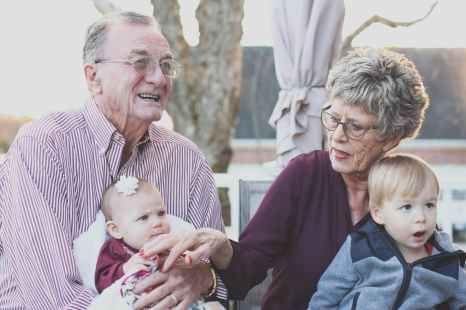
Having close in-law relationships, makes for a wonderful life of enjoyment.  You can learn a lot from the older generation.  I’ve been fortunate to have had kind and friendly relationships with all my in-laws.  And like Harper and Olsen state, “It is important for parents-in-law to find ways to personally build relationships with their children-in-law as individuals.” (Harper & Olsen, Pg 331) Mine have done this phenomenally!

couple walking on city street
Photo by freestocks.org on Pexels.com

Now, it’s my turn.  I’ve been an “in-law” for more than 12 years now and I’m still trying to find ways to engage my daughter- and son-in-laws!  I love them to pieces because I see how happy they each make my children.  I have a personal vengeance (not very Christian, I know) against cell phones because back in the olden days, you’d call a home phone and you’d never know who’d answer on the other end, so you would have a 50/50 chance that it would be one or the other of the married couple and it would give you a chance to strike up a conversation just for the sake of the call.  Now, with cell phones it puts you more on the spot, and you call a person directly.  That makes it harder, I think.  I seem to always get tongue tied and my mind goes blank.  In truth, I really want to connect with my son and daughter ‘in-laws’ more closely.   I would welcome hearing how you’ve found ways to build your relationship with yours.

photography of women using mobile phones
Photo by Brett Sayles on Pexels.com

I had not considered the matter of the explicit, implicit, and intuitive rules in families before, although I knew there were differences a plenty between my husband and me.  Now I know the why behind them!  I can see how being aware of these types of rules early on in marriage would be beneficial to working through some of the conflicts that come up in the relationship.

What wonderful tools this course has presented.  And, if taken to heart, what pitfalls could be avoided or mitigated for knowing them…the “Family Rules Inventory”  in Poduska’s book, Till Debt Do Us Part (Pg 29), being just one of them!

I think that the more we draw closer to our in-laws, the more robust, happy, and fulfilling our lives will be.  I wish us all this rich blessing!

smiling man holding woman s left shoulder
Photo by rawpixel.com on Pexels.com

References:

Harper, J.M. and Olsen S. F. (2005). Creating Healthy Ties With In-Laws and Extended Families. In C. H. Hart, L.D. Newell, E. Walton, & D. C. Dollahite (Eds.), Helping and healing our families: Principles and practices inspired by “The Family: A Proclamation to the World.  (pp. 327-334).  Salt Lake City, UT:  Deseret Book Company.

Poduska, B. E. 2000. Till Debt do us Part, (Chapter 2). Salt Lake City, Utah. Shadow Mountain.

Poduska, B.E. 2000. Till Debt do us Part, (Chapter 11). Salt Lake City, Utah. Shadow Mountain.

Benefits of Having ‘Councils’

photo of four persons uniting hands
Photo by rawpixel.com on Pexels.com

I found the reading by Elder Ballard in his book, Counseling with Our Councils, most interesting.  He quotes Brother Rulon G. Craven in his description “of the decision-making process that is followed in meetings of the Quorum of the Twelve Apostles” (Page 46) … council together.  I found it peaceful and calm.   It brought to mind the scripture, “Let all things be done decently and in order.” (1 Cor 14:40)  The process as described seemed wonderfully methodical; but not stoic or cold.  It came across to me as though each of the members was prayerfully prepared for the council.  Not only that, but they had an agenda about what they were to consider during that council prior to their meeting.   I think because of these two things, the discussion they each added in-turn to the concern at hand was very thoughtful, non-contentious…(as you would expect it to be among them), and positive.

Each member was respectful of each of the others’ in attendance and they each shared their points of view on the matters at hand.  One of the most important points of their council was that by the end of the final discussion on the matter, they are in unanimous agreement on the way the item should be handled.  It wasn’t that the majority felt this was the best way to go, or a compromise of any kind, but everyone was in harmony and comfortable with the decision on the issue.  That’s really quite remarkable when we often see a chaotic handling of differences on topics in society today.

Thinking about this got me thinking about the benefits we could have in our own families, if we followed the same format in our councils as the Quorum of the Twelve Apostles does in theirs

Having the council topics known by all parties before the council time would allow us to consider them and plan for them; not be caught off guard by them.

personal organizer and pink flowers on desk
Photo by Kaboompics .com on Pexels.com


It also would not be rushed because we have set aside the time for it.

pink rose near watch

Photo by Plush Design Studio on Pexels.com


Being spiritually prepared through earnest prayer, repentance, thoughtfulness about the subjects to be discussed, (and a good night’s rest beforehand wouldn’t be a bad idea either ) would help us to consider the topics not which are not only important for our family here on earth, but as a part of our eternal journey.  We would be less likely to  ‘wing’ our thoughts, and rather bring the Spirit into our discussion.

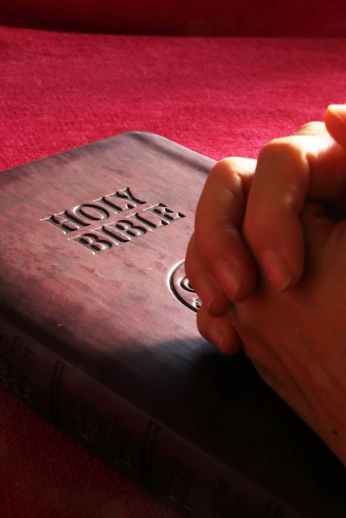
belief bible book business
Photo by Pixabay on Pexels.com

When we give respect and anticipate respect from others during our councils we are more likely to speak frankly and openly about matters.  Prayer beforehand also allows us time to ask for patience and understanding if the topic is possible to be a difficult one.  Coming to the council with an open-mind and searching for the best solution to the matter, we are receptive to other’s ideas and not as likely to stay focused on just our own.

Taking one matter at a time and resolving it, we feel a sense of accomplishment and unity with our ‘council’.

And perhaps most importantly, when we council together, we can come to a conclusion that is more comprehensive than if just one person makes the decision for all.

Our family wasn’t so good with having councils when the kids were growing up.  We are better now, but still could stand to improve.  I find that when we make time to council together, our life runs smoother.

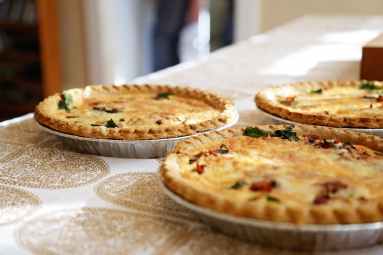
I also found it interesting to find out that the Council of the Twelve Apostles typically has some sort of refreshment (chocolate or pie) to bring further unification to the council members.  I’m all for incorporating that into my family councils!  How about you?

crust food homemade pie
Photo by Amanda Reed on Pexels.com
chocolate pieces on aluminum foil
Photo by Kaboompics .com on Pexels.com


References:

Ballard, M.R.  Counseling with Our Councils. 1997. Chapter 2.

The Holy Bible

Selfishness and The Damage of Infidelity

groom kissing bride neck
Photo by Dumitru Culiuc on Pexels.com

“Therefore, shall a man leave his father and his mother, and shall cleave unto his wife; and they shall be one flesh.”  (Moses 3:24)

‘We often go into marriage under a false premise.  During the courtship it seems that we have never had such an effortless way to have fun.  Happiness comes so easily.  We laugh, giggle, and share from the bottom of our hearts.  The satisfactions flow freely.

Yet the full experience of marriage will demand regular payments across time.  What seemed so easy at first will later feel impossible.  We may feel cheated when we discover that this bargain requires so much of us.  Character and companionship do not come without consistent investment.  Yet, if we continue to make payments on our relationship, we will be amazed what we get for our “sacrifices.”  (Goddard, Page 42)


adult affection baby child

Photo by Pixabay on Pexels.com

How very cold and lonely it is when the closeness of trust is taken away by the infidelity of a spouse.  The spouse has given up the ‘investment’ for the ‘gall of bitterness’.

“…all men that are in a state of nature, or I would say, in a carnal state, are in the gall of bitterness and in the bonds of iniquity; they are without God in the world, and they have gone contrary to the nature of God; therefore, they are in a state contrary to the nature of happiness.” (Alma 41:11)

man old depressed headache
Photo by Gerd Altmann on Pexels.com

It is so important to stay close to Heavenly Father through joined prayer, scripture study and church attendance.   And, although our readings didn’t say much about keeping the Word of Wisdom, this is also a very important doctrine to adhere too.  Alcoholic drinking and/or substance abuse can lower one’s inhibitions, and make wrong choices seem right.  Then, all in a moment, a marriage can be shattered.

It is not impossible to recover from one or the other of the spouse’s having an affair, but it creates so much hurt, pain, and mistrust and it makes an already complex relationship that much more difficult to maneuver.

I think that selfishness and thoughtlessness are two of the biggest causes for marital intimacy, in all its many forms, but spiritual and emotional especially, to be battered.  These weaknesses, when taken to extreme, as in the case of an affair, cause something that was beautiful and beneficial to the marital relationship to be turned into something ugly; a create insecurity and chase away a means they had for closeness between them.  The doubts that are raised and the damage done into a once loving relationship can never be undone.  It can be lived through and mended, but only through the love and charity of the ‘wronged’ spouse with the sincerest repentance of the offender, and the healing power of Jesus Christ.

I beseech you; stay turned toward one another in your marriage as Dr. Gottman encourages.

Love one another:  https://www.youtube.com/watch?v=_TiTXxQu6Gc

Give each other the benefit of the doubt when you are in a rough patch.  And use the ways that Dr. Goddard suggests in his book, Drawing Heaven Into Your Marriage Eternal Doctrines that Change Relationships to armor your most precious relationship.  I provide a summary from pages 94-95:

  1. “Do not allow the seeds of lust to germinate.”
  2. “Never make excuses to spend time alone with a person of the opositve sex who I not your spouse.”
  3. “Take responsibility for the message that you give.”
  4. “Do not allow your heart to well on anyone.” (Except your spouse.)
  5. “If you find yourself making excuses for continuing the relationship, you are addicted. GET HELP!” (Emphasis added.)
  6. “Spend more enjoyable time with your spouse.”
  7. “Review your spiritual efforts.”
  8. “Don’t set yourself up for failure…”Avoiding is better than resisting. Make your spouse a partner in all of your efforts to help a person of the opposite sex.”
  9. “Keep your soul free of the soul-numbing barrenness of pornography.”
  10. “Celebrate the sweet gift of companionship.” (With your spouse.)

It is so much more worthwhile to work through the marriages ‘ups and downs together, than to add an affair to the mix. Never give your spouse a reason to wonder about your marital fidelity, your integrity or your commitment to your covenants.

References:

Book of Mormon.

Goddard, H.W. (2009). Drawing Heaven into Your Marriage Eternal Doctrines that Change Relationships.  Cedar Hills, UT:  Joymap Publishing.

Gottman J.M., Silver N. (2015). The Seven Principles for Making Marriage Work. New York, NY: Harmony Books.

Holy Bible, King James Version.

YouTube –  Love One Another Song.  https://www.youtube.com/watch?v=_TiTXxQu6Gc


Working Through Gridlock

Some of the most valuable considerations from Dr. Gottman’s book, The Seven Principles for Making Marriage Work, for me have been the affirmations that:

  1. EVERY marriage will have some irreconcilable differences
  2. We will not ‘like’ our spouses sometimes
  3. There will be things that we want our spouses to change; and there will be things they want us to change – this is just natural.
  4. We won’t always get our way!
  5. Sometimes we will miss our own involvement in the issues we have in our marriage difficulties.
  6. Marriage is not for the faint of heart –  IT TAKES WORK…
  7. Love
  8. Charity
  9. Humility
  10. Concern
  11. Caring
  12. Thoughtfulness
  13. Discernment
  14. Appreciation
  15. Compassion
  16. Empathy
  17. Willingness to see the other person’s view of matters
  18. An ability to be honest about who we are, what we need, and what our dreams and hopes are.

In the earlier days of my marriage, I sometimes thought I was in hell and wondered how I got there and how was I going to get out of THERE … and MY MARRIAGE!  I had obviously married the wrong person, and I wondered how I did that when I had prayed for confirmation of marrying him before doing so!  I felt more than a little betrayed.

My husband and I had many hours of intense, tear-filled, high volume conversations.  My heart ached so much that I thought it would be easier to have it ripped out than to have it feel the hurt and anger that it did.  As I read Gottman’s pattern for successful grid-lock conversations, how I would have WELCOMED knowing that information when we were going through our tough times.

Please permit me to share Dr. John M. Gottman’s unlocking the gridlock conversation pattern from his and Nan Silver’s book, The Seven Principles for Making Marriage Work so if you find yourself needing it, you can use it, rather than wallow through unproductive arguments.  (I paraphrase and quote from pages 250-259)

goats-animal-bock-billy-goat-67280.jpeg
Photo by Pixabay on Pexels.com

Isolate one of your grid-locked issues:

  • Focus on what each partner needs, wants, and is feeling about the situation.
  • Write it down – explain why (what hidden dreams underlie your position).
  • Give each other time to talk about it (without judgement) – just listen to one another.

“The GOAL is simply to UNDERSTAND WHY each of you FEELS so STRONGLY about this ISSUE.”  (emphasis added)

THE PROCESS

  1. Ask direct, meaningful, heartfelt questions of one another – with the main outcome to find out “What do you want?  What do you need?  If I could wave a magic wand and you’d have exactly what you needed, what would that look like?”  Don’t be snide or condescending.  Be sincere, concerned and non-judgmental.
adult beard blur business
Photo by rawpixel.com on Pexels.com

In order to soften the grid-lock, one must support their partner’s dream. “That doesn’t necessarily mean that you believe the dream can or should be realized.” But you must HONOR it in one of three ways:

a) Support it by listening with enthusiasm.

b) Actively enable the dream.

c) Become a part of the reality of the dream.

“The bottom line in getting past gridlock is not necessarily to become a part of each other’s dreams (although your marriage will be more enriched to the extent that you can) but to honor these dreams.  After all, you don’t want the kind of marriage in which you triumph at the expense of crushing your partner.”  (I hope!)

  1. Soothe one another – Pay attention to how each of you is reacting (physically and emotionally). If things are becoming overwhelming – stop for at least 20 minutes and do something that relaxes each of you.
    pexels-photo-196666.jpeg
    Photo by picjumbo.com on Pexels.com

    https://www.youtube.com/watch?v=Z8uvPLsah0s

  2. Reach a Temporary Compromise (The Two-Circle Method) (Gottman, Pg 185). – You will use two circles; one inside another.  Use the inside circle to note “aspects of the problem you CAN’T give in on.”  And the the outside circle to note “aspects of the problem you CAN compromise over.”

    close up photo of camera lens
    Photo by Fuadi Afif on Pexels.com

Share your two lists with each other, and then, “try it out for about two months, then review where your stand.  Don’t expect this to solve the problem, only to help you both live with it more peacefully.”


  1. Lastly – say ‘Thank-You’

    affection appreciation decoration design
    Photo by Carl Attard on Pexels.com

    Offer your partner 3 specific thank-you’s. Gottman provides a number of suggestions on pages 75 and 76 of his book, here are but a few…

  • “Thank you for listening to me.”
  • “Thank you for being gentle with me.”
  • “You look great tonight.”
  • “Thank you for loving me.”
  • “I appreciate what a loyal partner you are.”

Photo by Carl Attard on Pexels.com

I hope that when you come to one of those unrelenting issues, you will try this method of working through it.  I think you’ll find that you’ll feel appreciative of each other’s points of view and that you will feel in better control of the issue and more peaceful in your marriage because of it.

I can attest from personal experience that the effort one puts into having a successful marriage is worth every ounce of angst, heartache, and tears; and that there can be devotion, affection, and love beyond measure.

REFERENCES:

Gottman J.M., Silver N. (2015). The Seven Principles for Making Marriage Work.  New York, NY: Harmony Books


Don’t Blast’em!

Here a couple goes down the aisle, blissful and serene.  They don’t see the negative sides of each other because, well, they are different than all other couples. They just won’t have any difficulties.  After all, they are ‘in love’, and if a couple is ‘in love’, they just won’t have problems.  Or, will they?

yellow plush toy
Photo by Pixabay on Pexels.com

Dr. John Gottman states that ‘yes’, they will have problems; both solvable and perpetual ones.  And, it won’t matter how ‘head-over heels’ they are for each other!  Problems in marriage are just a natural part of being married, and part of Heavenly Father’s plan to help us have experiences in order to work through them so we can become more like Him as we exercise patience and understanding of our spouse.

I think that this gross misconception of, if one is ‘in love’, one will have no problems, is something that more attention ought to be given to.  It seems that couples thinking this way are setting themselves up for huge disappointment.  One that if understood from the beginning would help strengthen their resolve to staying married when the really tough times do come.

Having problems is not enjoyable says Gottman, “but we are able to cope by avoiding situations that worsen them, and by developing strategies and routines that help ease them.” (Pg 139)  One very important strategy to work through a solvable problem that Gottman promotes is that of starting the conversation by using a ‘soft start-up’.  Basically, remember when working through a problem…don’t start off by blasting your spouse.  It will get you nowhere!  (Pg 164)

three red hearts hanging with white flowers
Photo by Pixabay on Pexels.com

A soft start-up consists of these four elements:

  • Share some responsibility for the problem – this aspect is critical for effective problem resolution;
  • Express how you feel about it (matter of factly, without blame or criticism);
  • Be specific about the particular situation;
  • Express what it is you need (making sure it’s stated as a positive need, not what you don’t need). (Pg 165)

Dr. H. Wallace Goddard’s puts it this way, “Marriage does impose grueling humbling, baffling, and frustrating responsibilities.  Yet, marriage is not the enemy of moral development in adults.  Quite the opposite.  Being married and having children has impressed on my mind certain lessons, for whose learning I cannot help being grateful.  My bonds to (my family) are, I know, my liberation.  They force me to be a different sort of human being, in a way in which I want and need to be forced.” (Pg 110)

selfie family generation father
Photo by Creative Vix on Pexels.com

The sobering truth is that “only 40% of the time do couples divorce because they are having frequent, devastating fights.  More often marriages end because to avoid constant skirmishes, husband and wife distance themselves so much that their friendship and sense of connection are lost.” (Pg 164)  That is so unfortunate, but I’ve seen this to be true.  I think it behooves couples to search out Dr. Gottman’s book, Seven Principles for Making Marriage Work because within its pages are resources that provide individuals exercises and words to use to productively discuss and work through their solvable and perpetual problems.  Each person and couple can feel whole as they learn and utilize these effective tools.  Through their use, married life can be nurtured and happier.

men and women wit kids
Photo by Peace Alberto Iteriteka on Pexels.com

REFERENCES:

Gottman J.M., Silver N. (2015). The Seven Principles for Making Marriage Work. New        York, NY: Harmony Books

Wallace Goddard. (2009). Drawing Heaven into Your Marriage. Cedar Hills, UT: Joymap Publishing


Are You Trapped in Your Cocoon?

lion painting
Photo by Jakob on Pexels.com
This has been a humbling week as I have been reading about pride and its effects on the one who is prideful, the spouse of one who is prideful, and the families and friends and even co-workers of same.  I have found areas that I am prideful in that I hadn’t realized before. 
I have my work cut out for me!

One the most piercing comments from H. Wallace Goddard, Ph.D.’s book, Drawing Heaven into Your Marriage is:  “We define the problem – whatever it is – in terms of our partner.  And we tell the story to ourselves in ways that suggest we were earnestly and innocently going about life when our partners hurt us.  We are innocent.  They are guilty.  Our narrow focus keeps us from noticing our own gaps in knowledge, our personal failings as well as the good qualities and good intentions of our partners.”  (Pg 72)  How often are we each guilty of that?  For me, more often than I’d like to admit!

Something that came to mind as I was pondering on this topic is how entrapping and lonely pride makes one.  It causes the person who is prideful to be constricted and less happy in the long run.  If one doesn’t give up their prideful ways, they can see their partner (or another person) at fault for any number of real or imagined things.

man in blue and brown plaid dress shirt touching his hair
Photo by Nathan Cowley on Pexels.com

But, if a prideful person looks beyond themselves, to see the other person as someone who should be respected and has no more faults and flaws than their own, there is room for appreciation and happiness to grow in their relationship.


When we continually look for fault in another, we raise ourselves as better than another and falsely so.  This act of fault-finding and being prideful, in my mind, is very claustrophobic thinking.  It leads one nowhere but in a negative direction.  There is no positivity to it.  It finds no good in another.  It compounds upon itself.  It just seems so restricting.  Pride is even counter intuitive, it seems to me, because someone who is so prideful, one would think, would want and expect only the best for themselves, but the reality of it is, that that is not what they will obtain.

On the other hand, when we are prideful, and we all will be many times in our lives, and we REPENT and turn from fault-finding to look at how we are involved and perpetuating a negative situation, we then have an opportunity to change.  This change will allow us to improve our character and in so doing, be happier.  When we are understanding, empathetic, and willing to appreciate our spouse’s differences, we give them room to trust us.  They are then more likely to feel our love.  When we change our prideful behaviors and have a more accepting heart, we allow room for their hearts to create positive change also.

belief bible book business
Photo by Pixabay on Pexels.com

The liability of pride, when turned around through the use of agency, can be a blessing as we work through the process to turn toward others.  Whether we will be cocooned forever in despair or be transformed through it by our humility to emerge, as it were, a free beautiful butterfly is our choice.  It is my hope we will choose the latter.

bloom blooming blossom blur
Photo by Pixabay on Pexels.com


green cocoons on tree branch
Photo by Pixabay on Pexels.com


Reference:

Goddard, H. Wallace, Ph.D. (2009). Drawing Heaven into Your MARRIAGE. Cedar Hills, UT:  Joymap Publishing.

Turning Toward Each Other in Marriage

Do you or have you ever thought about whether you are turning toward or away from your spouse?   We’ve all done that to one extent or another, but perhaps never put a label on it or taken the time to consider what those actions mean to our marriage and to our future married life.

I think that when I’ve turned away from someone, I’ve been more wrapped up in the actual act of doing the turning away, rather than in acknowledging that I was truly turning away from them.   Certainly, clouding the issue was that I might actually be the cause of the situation making me turn away in the first place, too.  Every been there?  It isn’t a very Christlike place to be, is it?  And, it isn’t a place to grow from, rather, just a place to be wallow in self-pity in and/or be sad, or mad in.

woman and man wearing brown jackets standing near tree
Photo by Vera Arsic on Pexels.com

After reading this week about turning toward others, in my marriage class, I’ve found myself thinking of a relationship I was in many years ago where there was a lot of bickering, arguing, and frustration.  A place where I didn’t feel understood and not feeling that I understood that person much either.  I can tell you, it’s a lonesome place; cold and devastating.  And one in which I wondered how it had  gotten to such a state.  I wanted to find the door and get OUT!

“Sometimes, and especially if a relationship is going through a rocky period, a spouse may not recognize when the partner is making a bid for connection because it comes out sounding negative.” (Pg 91) So often true in my case.  There were probably bids for connection all over the place on both our sides, but they fell like rain with no bucket to catch them.

What terrific guidance this would have been had we known it and been willing to receive and apply it, and I quote …”So before you reply defensively to your partner, pause for a moment and search for a bid underneath your partner’s hard words.  Then, focus on the bid, NOT (emphasis added) the delivery.  If you find it difficult not to react defensively, first take five really deep breathes, counting slowly from one to six as you inhale and then slowly from seven to fifteen as you exhale.  Then say to your partner, ‘I want to respond to you positively, so can you please tell me what you need right now from me?  I really want to know.” (Pg 92)

In this circumstance, I realized that things were so awful a decision had to be made. Was it going to be the end of the marriage or was it going to be a new beginning?  And, if it were the later, how in the world were things going to change enough to make the marriage feel like a warm, kind, caring, and friendly relationship again?

I can only say that it was when (my husband) and I decided to turn toward the gospel, turn toward our Lord Jesus Christ, and turn toward honoring our temple covenants that there was this change in our hearts that we could not have accomplished on our own.  We had to repent of our selfish ways and take time to consider each other before ourselves.

Again, I don’t know how my relationship had gotten so off track because all my growing up years, I saw my parents doing just that – bidding and accepting each other’s offerings to come together.  And, I’ve seen their closeness built by the simple and small conversations and actions they’d have each day.

For example, my Dad would see that he could make something a little easier for my Mom (by building this or that) and he would do it.  And, my Mom would notice that my Dad had fallen asleep in his chair, and she would gently place a blanket over him to keep him warm and let him rest.  I’ve always admired this interaction of my parents. I remember fondly, my Dad, who turned 87 this week, coming home from work each night and sitting at the dinner table with my Mom and me, explaining in detail (using the forks, knives, and other dinnerware) how he’d worked to maneuver his backhoe on the construction project that day.  To me this seemed as natural as buttering bread.  This daily dialogue was a ritual that my parents shared together.  And for me, it has always been comforting.

“…turning toward each other is …so easy to accomplish. It only takes a small gesture to lead to another and then another.” says Dr. Gottman. (Pg 89) And, I find that as my marriage has gotten past a very trying time, that it truly is the small gestures and quick pleasant glances between us that help to keep us on a good path. We laugh and enjoy each other because we are thinking the best of each other.  We work together instead of working against each other.  Another simple thing like greeting each other with a kiss or leaving with a kiss is another very customary thing for us now too.

We’ve learned a lot over the years as we’ve stayed close to the gospel.  And dear reader, know that prayer – truly heals hearts.

Working to bring laughter into your marriage is important too.  One of our good friends gave us this counsel many years ago.  We’ve used it many times, and it works!  When either of us is taking ourselves too seriously, it breaks the negative direction and helps us become closer again.

The song, Lean on Me, by Bill Withers, came to mind as I thought about the need for us to turn toward one another and the wonderful benefit it has as we do.  I hope that you will be mindful of the bids your spouse is sending you and that you will in kind be responded to lovingly by yours.

man and woman hugging and sitting on a bench
Photo by Daria Shevtsova on Pexels.com

The lyrics are in part:

                        “Lean On Me”

Sometimes in our lives
We all have pain, we all have sorrow.
But if we are wise,
We know that there’s always tomorrow.

Lean on me when you’re not strong
I’ll be your friend, I’ll help you carry on
For it won’t be long
‘Til I’m gonna need somebody to lean on.

Please swallow your pride
If I have things you need to borrow
For no one can fill those of your needs
That you won’t let show.

You just call on me, brother, when you need a hand
We all need somebody to lean on.
I just might have a problem that you’ll understand,
We all need somebody to lean on.


If there is a load
You have to bear
That you can’t carry
I’m right up the road
I’ll share your load
If you just call me.

Call me if you need a friend

References:

Gottman J.M., Silver N. (2015). The Seven Principles for Making Marriage Work. New               York, NY: Harmony Books

https://www.azlyrics.com/lyrics/billwithers/leanonme.html

The Importance of Nurturing Marriage

Dear Reader,

Have you taken the time today to really appreciate your husband or wife? 

NO, I mean it!

  • Have you asked yourself why you fell in love with him or her?
  • Are you looking for ways that keep your communications with them uplifting?
  • How do you speak of them to others and to them when you are together?
  • Have you asked them in all seriousness how they are doing today, and most importantly, have you truly listened to them?
  • In the course of your day, have you thought to encourage, thank, enlighten or compliment them? 

    affection afterglow backlit blur
    Photo by luizclas on Pexels.com

Research shows that “fondness and admiration are two of the most crucial elements in a rewarding and long-lasting romance.” (Pg 69) and further, Dr. John M. Gottman and Nan Silver have found that “When you acknowledge and openly discuss positive aspects of your partner and your marriage, your bond is strengthened.” (Pg 74)  Now, who couldn’t benefit from that with the worldly forces constantly attacking marriage!

I continue to read Gottman and Silver’s book, The Seven Principles for Making Marriage Work, and find that I can get happily lost in it.  My husband and I had a terrific evening together doing a couple of the “Love Map” exercises recently.  I was astonished to find that my husband was more ‘in-tune’ with me than I had realized.  I have sometimes thought that he is not paying attention to our conversations, when I happily find that it is me who has misread him.   He most certainly has been paying lots of attention!  This has made me feel especially close to him.

The exercises we chose were the Love Maps Questionnaire (Pg 56) and the 20 Questions Game (Pg 58).  We learned some new things about each other which is pretty neat since we’ve been married 25 years, and mostly we found that we know important points about each other and neither of us is too far from the other in our ‘map’ ratio.  It felt good just to spend this time together relating to each other about ourselves and our marriage.  Great idea for a date night activity!

Now you are probably asking, “What is this ‘love map’?”  It is what Gottman describes as “that part of your brain where you store all the relevant information about your partner’s life.”  You know…like, what size shoes she wears, what the name of his favorite player and sports team are, what you spent doing three anniversaries ago or what the name of your school play in 7th grade was…the fibers that make up your life.  Although in an of themselves, these little things don’t sound like they could really important to a marriage, but the research proves otherwise.  Knowing these little (and the big) things about our marriage partners keeps us connected.  It’s crucial in a relationship for each partner to feel known and cared about.  “The more you know and understand about each other, the easier it is to keep connected as life swirls around you.” (Pg 56)

I’m humbled to learn how naive I have been in thinking that I didn’t have much to learn about marriage relationships.  I am finding that I am learning SO much from the class I’m in, and especially from this book!  I keep thinking that I need to tell one or another of the children about ‘this or that’ from the readings.  Perhaps I’ll send it for Christmas…it’s a small price for such a large return in love benefits.

Yours,

The Merry Ponderer

References:

Gottman J.M., Silver N. (2015). The Seven Principles for Making Marriage Work. New York, NY: Harmony Books.


Positivity in Marriage – Books to Checkout!

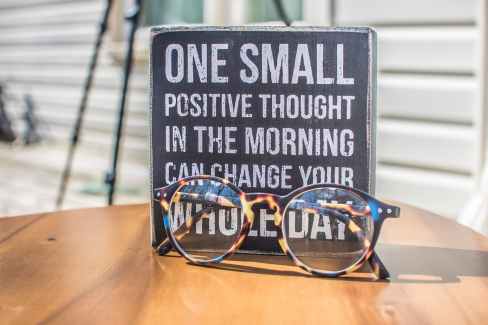
photo of a sign and eyeglasses on table
Photo by Binti Malu on Pexels.com

What interesting reading I have found in two books I’ve been reading this week in my marriage class!  What are they you ask…The Seven Principles for Making Marriage Work by John M. Gottman, Ph.D., and Nan Silver; and Drawing Heaven into Your Marriage by H. Wallace Goddard, Ph.D.

Having been married, divorced, and then married again, I wish I had been introduced to these materials ages ago.  I have found myself in tears from a deeper understanding of how much my Heavenly Father loves me to embarrassment and guilt in realizing how my negative actions have caused hurt and pain in those I say I’ve loved.  Have you gone through emotions like this this week?  If not, I encourage you to purchase copies of these books.  They will make you think about your marriage conversations.

As I read through these materials, I learned about and could relate to what are called the ‘four horsemen of the apocalypse’ by Dr. Gottman.  What are the four horsemen you ask – Criticism, Contempt, Defensiveness, and Stonewalling.  Personally, I have been both the recipient and the provider of them all as I would imagine we all are if we are honest with ourselves.


The most apparent horseman to me is stonewalling, and the experience of ‘flooding’ that goes along with it, which I can attest is draining and disheartening. The term Dr. Gottman used for it was ‘paralyzing’ and I don’t think it could be more accurately expressed.  Have you ever been so overwhelmed by negativism and emotion that you just shut down without responding because of it?  Flooding is the physical and psychological reaction to excessive stonewalling situations.  This is better explained in The Seven Principles of Making Marriage Work. (Pages 38-42)

These books are both positive in nature.  They are pro-marriage and they both express ways to help those who are interested in getting married, those married, and those who have a less than happy marriage be able to learn communication skills and understand why their relationships may be less than ideal.  Reading them can help you think and act differently in and about your relationships.

For example, a concept expressed in Dr. Gottman and Nan Silver’s book, by psychologist Robert Weiss from University of Oregon, speaks of ‘positive sentiment override (PSO)’  which is a key factor to having a healthy marriage.  As is the case in many things in life…it’s about balance.  .  So, what is PSO?  “It is a couple’s tendency to have “their positive thoughts about each other and their marriage be so pervasive that they tend to supersede their negative feelings” Therefore, “it takes a much more significant conflict for them to lose their equilibrium as a couple than it would otherwise.  Their positivity causes them to feel optimistic about each other and their marriage, to have positive expectations about their lives together, and to give each other the benefit of the doubt.” (Pg 22)   This isn’t to say you will never have an argument again.  But, by reading their book, you will have tools to help you more successfully express yourself without creating a negative environment where nothing is gained, and much can be lost.

One of the simplest things to keep in mind from Dr. Gottman’s research is this… it takes 5 positive interactions to 1 negative one to keep things in balance for a happy marriage.  So, I would say that never don’t do the nice thing for your spouse!  Have you hugged YOUR sweetheart today?

driers
Photo by Kaboompics .com on Pexels.com

One of my favorite points made in Dr. Goddard’s book, so far, is this:  ”When we insult the dignity of family members, we create a system of resentment and spite.  We lose any influence we could have had.  As Jesus ably demonstrated, a simple and gentle answer is best.  Often less is more.” (Pg 20) This is yet another demonstration that we should be positive and kind in our interactions and if we do our relationships will be benefitted.

It is not always easy to think of others when we are in the heat of the moment, but it is a blessing to have the example of Jesus Christ to emulate.  It seems that the more we do to follow Him, the stronger, more positive, and healthy our marriages will become.  The scriptures, along with the books I mention above, will help us in our journey to find contentment and happiness in our marriage.  Check’em out!


Value in a Covenant Marriage

groom holding bride s hand walking near cathedral
Photo by Lu01b0u u0110u1ee9c Anh on Pexels.com

My thoughts turn to those considering marriage; I think that one should go into it with their eyes wide open and realize that there will be tensions that come between them and that it would be a huge benefit to discuss before marriage,how they will work through those times.

Will it be a… nobody goes to bed on an argument?  Will it be setting a timer and each listening to the other for a specific amount of time and then providing feedback after each has had their time to speak?  Will it be having some alone time either by taking a walk for simpler matters or going to the temple when there are ‘weighter’ concerns that must to be pondered?  In all marriages, no matter how rosy and splendid they are at the outset; will have times when their issues/differences will try the others’ patience.  It’s then, that these tough times will need to be respectfully, kindly, and humbly worked through.  Deciding some of these communication methods early, and to constantly remember that the issue causing the friction should not be viewed by each party as an, “It’s all about me!” scenario.

A covenant marriage seeks to air-out differences by working them through in a way that allows the marriage to be stronger.  When we find understanding between each other and allow our spouse to feel whole throughout the process of speaking our differences, we find that we both “win”.  Going through a difference of opinion as though we were going into battle, will not be of benefit to the marriage or to other family members.

I have lived through both approaches to differences of opinion, and I can attest that when the Lord is allowed to feel comfortable in our presence throughout our discussion; we too will feel “whole” from the experience and will feel more enlightened because of it.  We can also feel closer to our spouse by having truly listened to them rather than desiring only to have our point of view heard.

I value Elder Bruce Hafen’s talk, Covenant Marriage where he makes the points about a covenant marriage versus a contract marriage and describes the covenant marriage as one in which each spouse gives 100% to the relationship.  Also, that they are willing to work through the tough times.  This means really giving and taking for the long haul.  The covenant marriage is a place where each husband and wife give and grow with and from each other.  When we stop to really consider this point, there are so many ways that we can do that.  Just as a very simple example, my husband understands more about how to fix and repair things around our house, and I know more how to feed us.

We know from The Family: A Proclamation to the World that each male and female is given divine characteristics – a woman to nurture and a man to protect being only two.  There are many talents, abilities, and characteristics that each spouse has and when they are looked at as valuable gifts, rather than insurmountable differences, we can draw closer to one another and become better ourselves through our learning from and appreciation of them and each other.

Elder Hafen makes another point too, one that I hadn’t given much thought to before reading his talk, and that is, that when we marry / are sealed, we are also making a promise to our community (those in our family and friends who share our joy.)   As I ponder this point, I realize its validity because I know how devastating it is when a marriage breaks up and how it affects the family and friends of the couple.  It is crushing to the couple, but also for those associated with them.  I know it was true when my first marriage came apart.  Oh, how important it is to follow the doctrine given in the Doctrine and Covenants to cleave unto one another.  (D&C 42:22)

It is through the kept promises that are made to each other, to God, and to the community, Elder Hafen says, that we are bound.  And, isn’t being bound in this way such a safe, loving, and honorable “place”?

When the challenges come, and again I say, they will, and you wonder if going through them is worth it; I provide my witness that, YES, it is worth all you can do!  My second marriage was once on the very brink of being only a contract marriage.  It came down to, am I going to live up to the promises I made in the temple or am I not?   Our adherence to our covenants are strengthening, empowering, and worth our defending.  The Lord blesses those who stay true to their promises.

References:

Hafen, B.C. (1996). Covenant Marriage. Ensign. (November), retrieved from url (https://www.lds.org/ensign/1996/11/covenant-marriage?lang=eng&_r=1)

Doctrine & Covenants